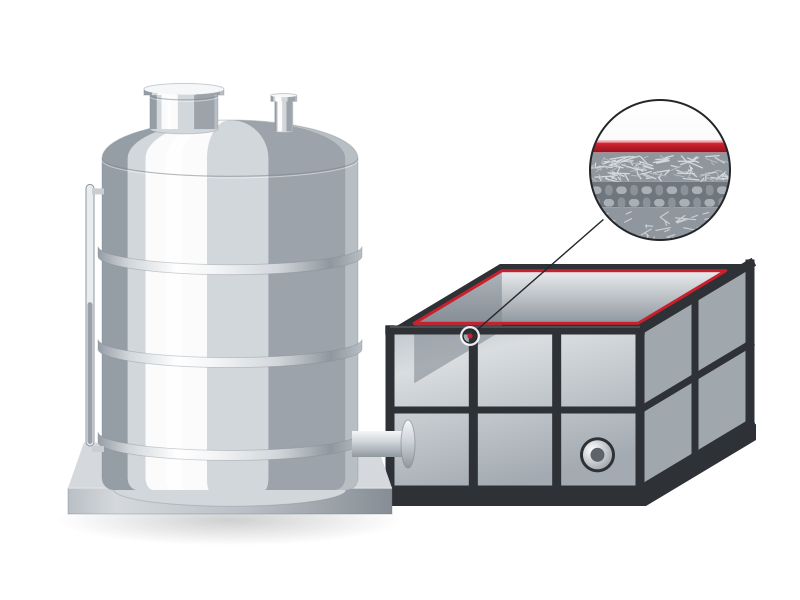
FRP tanks and MS FRP tanks
All-FRP tanks and mild steel tanks lined with FRP, for water, effluent and chemicals.
A seamless glass-fibre and resin lining laid on site over terraces, tanks and wet areas.
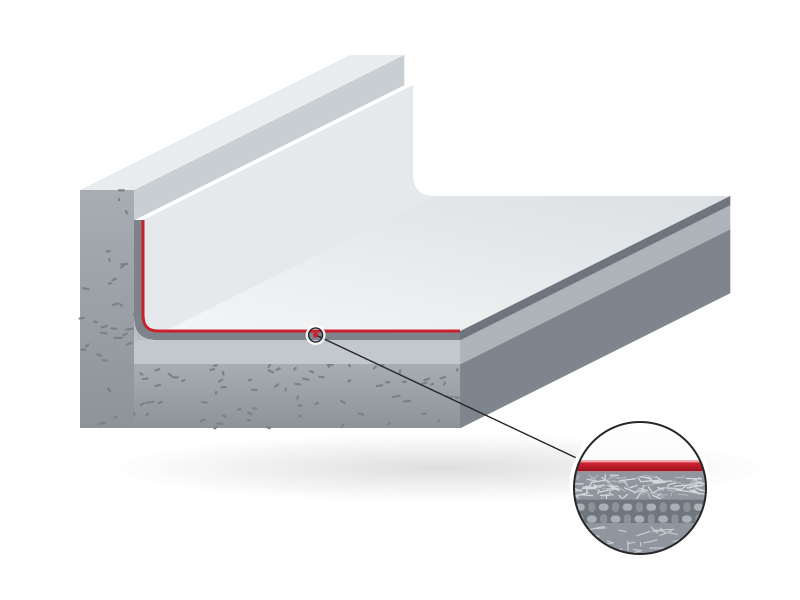
FRP waterproofing is a lining of glass-fibre mat and resin laid directly on the surface, on site. It cures into one continuous layer that bonds to the concrete, with no joints for water to find.
We use it where water sits or flows: terraces, water tanks and sumps, sunken bathroom slabs, planter boxes, swimming pools and concrete gutters. The lining is turned up the walls and coved at the corners, which is where leaks usually begin.
Exposed terraces that leak through cracks and at the parapet.
Concrete overhead tanks and underground sumps that seep.
Sunken slabs and wet floors, lined before tiling.
Planter boxes and podium gardens over occupied floors.
Swimming pools, fountains and ponds.
Concrete gutters and channels that leak at joints.
Everything we make is made to order. These are the choices you make with us before moulding starts.
Made in our unit at Jakkur, Bangalore, and fitted by our own team.
We look at the surface, existing leaks, slopes and drains.
Loose material comes off, cracks are repaired, the surface is cleaned and dried, and coves are formed at wall junctions.
A primer is applied so the laminate bonds to the concrete.
Glass-fibre mat is laid, wetted out with resin, rolled to remove air and lapped at every edge.
A top coat seals the surface and protects it from sun and wear.
Where practical, the area is water-tested before handover.
The kind of work we're asked for most often.
More answers on our FAQs page.
Most coatings are thin films. An FRP lining is a reinforced laminate: glass-fibre mat set in resin, which makes it tough and continuous. Moving cracks and expansion joints still need their own detail, which we plan before starting.
Yes. In bathrooms and sunken slabs the lining is usually covered with screed and tiles. On terraces it can be left exposed with a top coat, or covered.
The tank has to be emptied, cleaned and dried first, and the lining has to cure before it's filled again. We'll tell you how long it will be out of use.
Loose or failed layers have to come off so the FRP bonds to sound concrete. We'll tell you after the inspection.
All-FRP tanks and mild steel tanks lined with FRP, for water, effluent and chemicals.
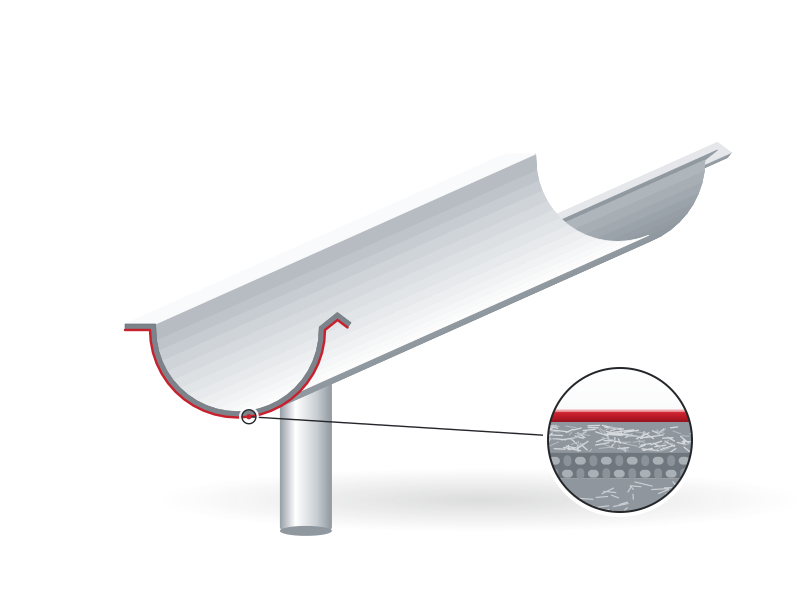
Rain and valley gutters that don't rust, and linings for leaking concrete gutters.
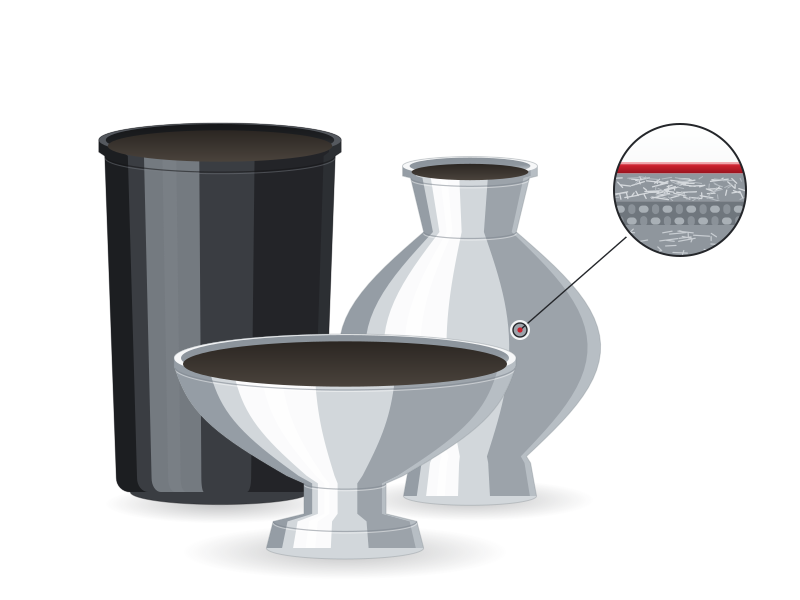
Planters and pots in any size and colour, light enough to move.